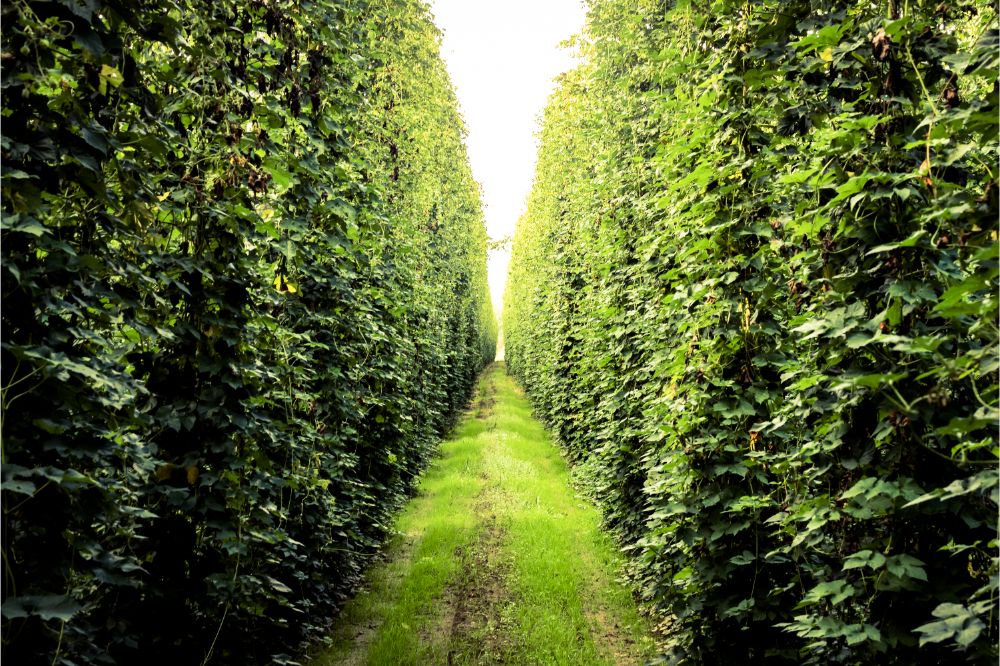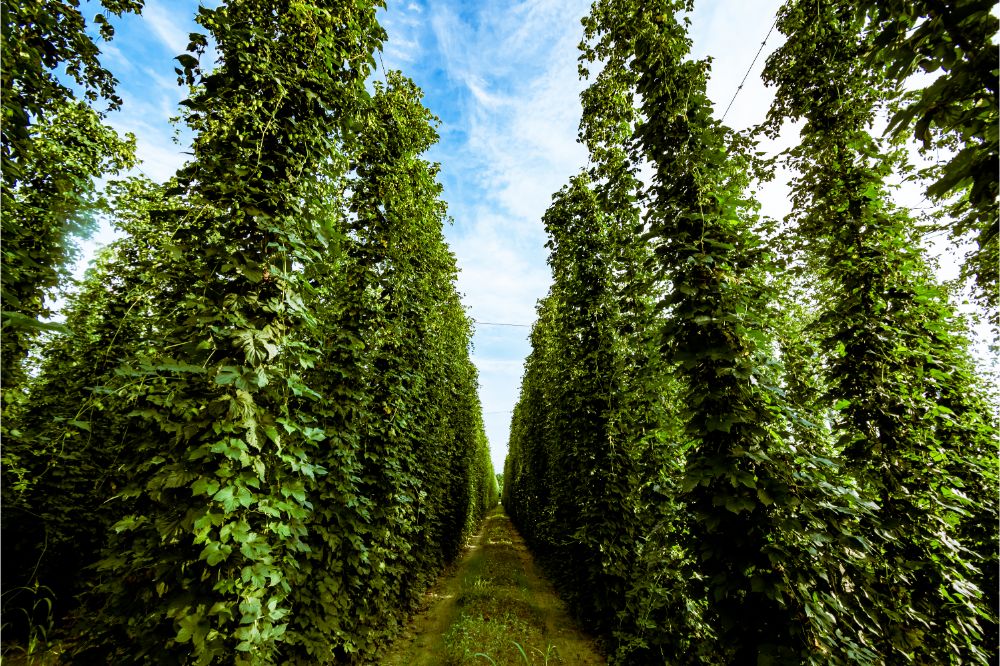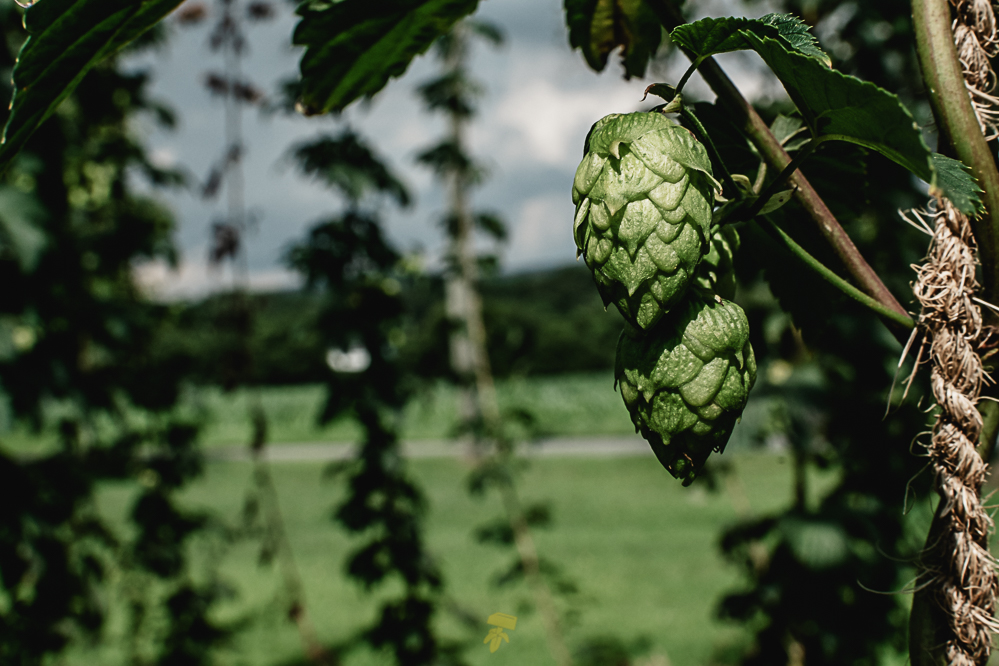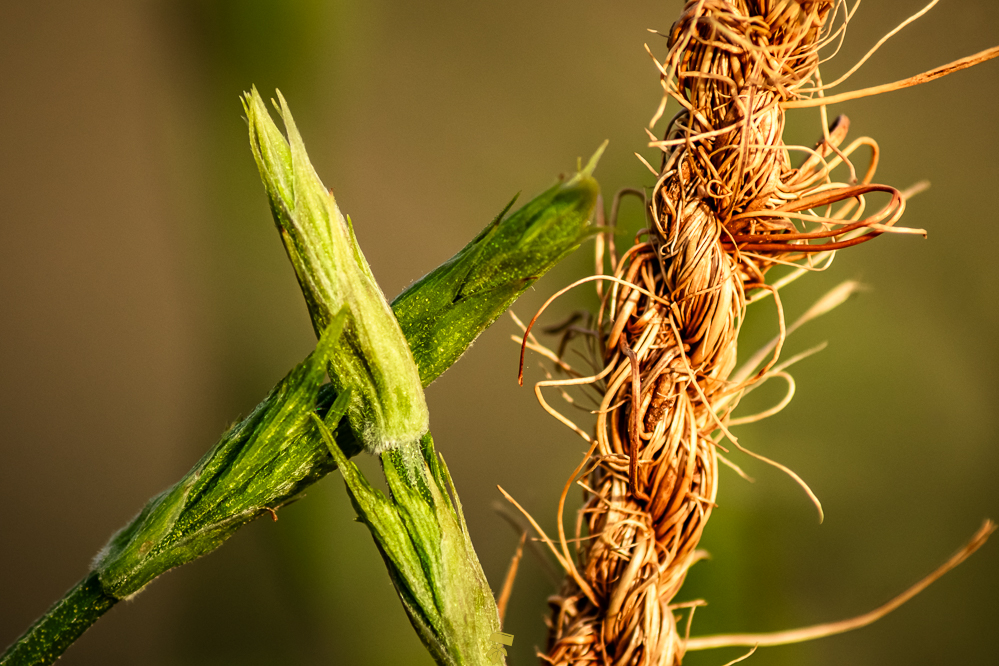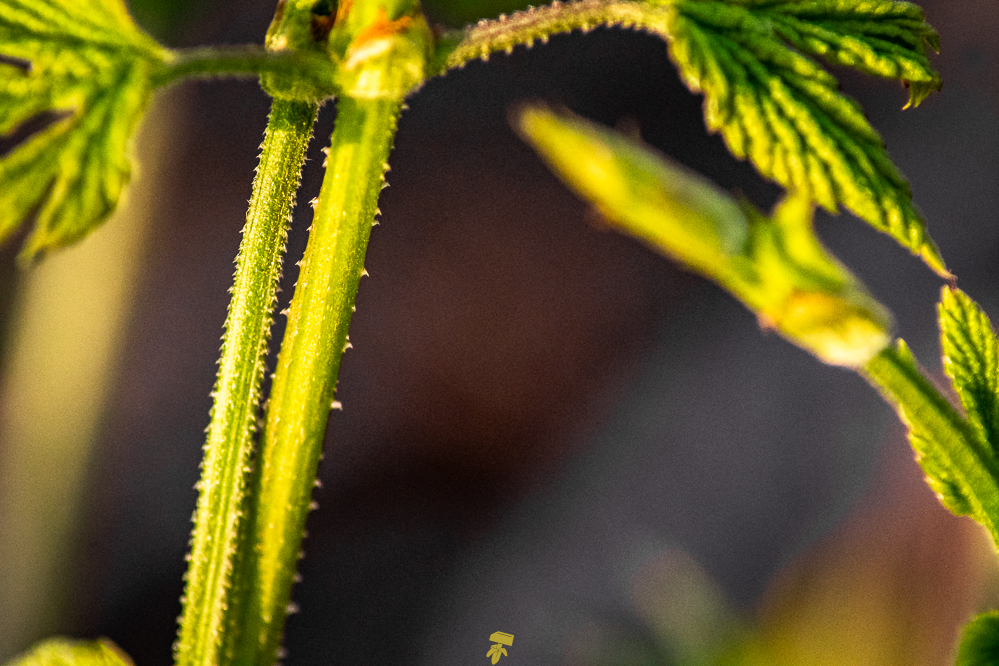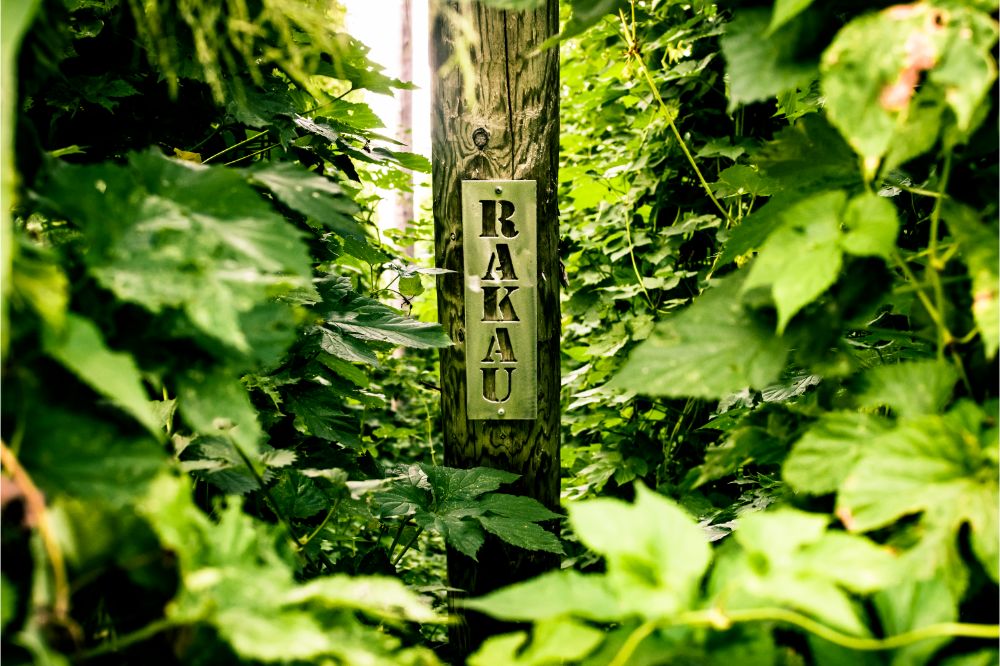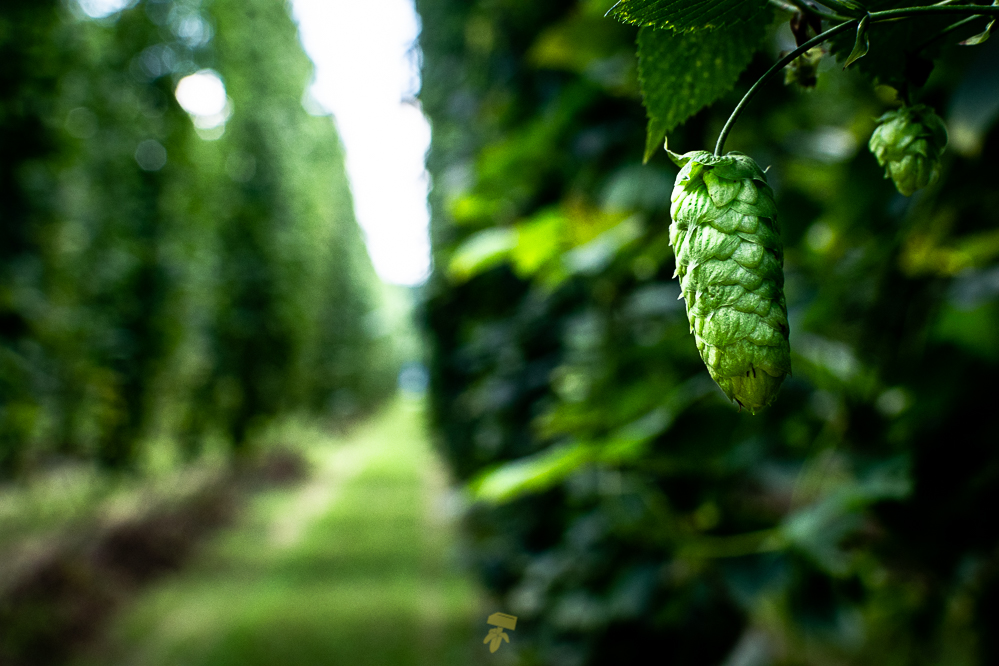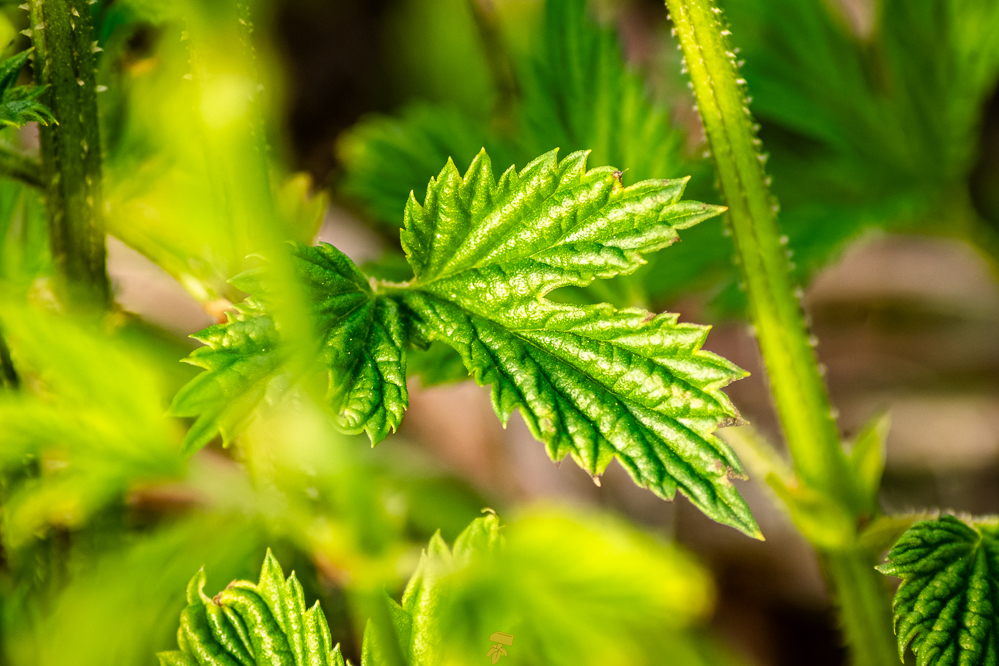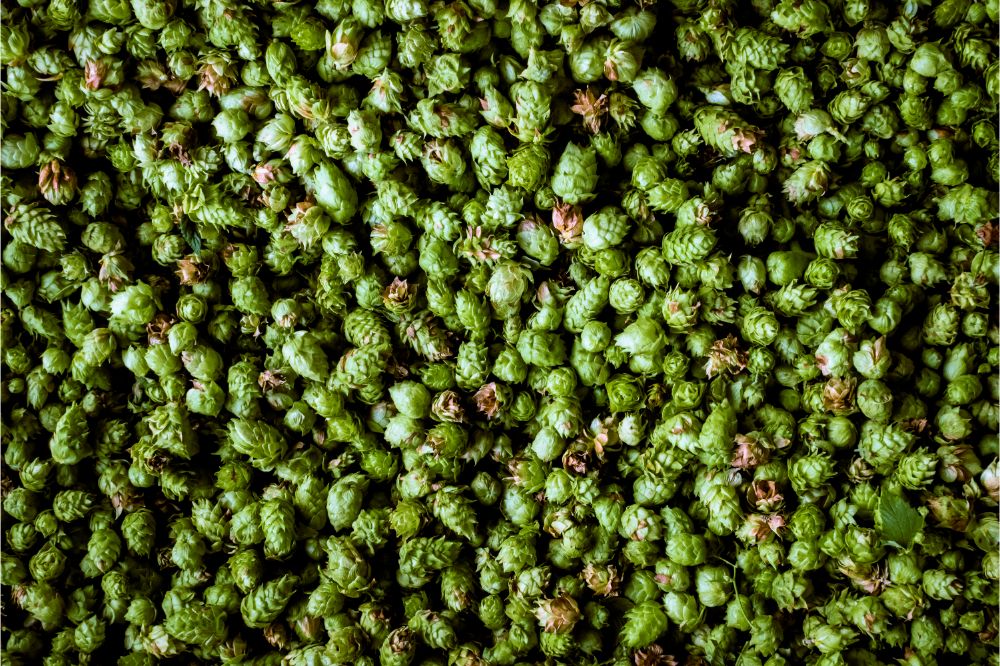
Common Hops (Humulus Lupulus), a member of the Cannabaceae family of flowering plants, are perennial plants that produce bines from their roots each spring, usually taking three years to reach full maturity. The twining stems that climb up trellises are called bines and are not vines in the traditional sense, as they climb using stiff hairs instead of tendrils. These hairs easily cling to the coconut fibre, allowing the plant to grow vertically. During spring, hop plants prioritize the growth of their main bines upwards and the development of leaves. This initial vegetative growth phase is crucial as it directly impacts the plant’s overall yield and future production of cones, the flower of the plant.
For the past several years, I have been a frequent visitor to the farm, beginning in 2017 when I joined Aeronaut Brewing to forage for wild sumac, followed by multiple years of Brewer’s Day celebrations. I’ve ventured out in the middle of winter and even camped by the river during the summer. Starting in 2025, I have begun to interview the farmers and brewery staff about the farm, the hops, and the beer.
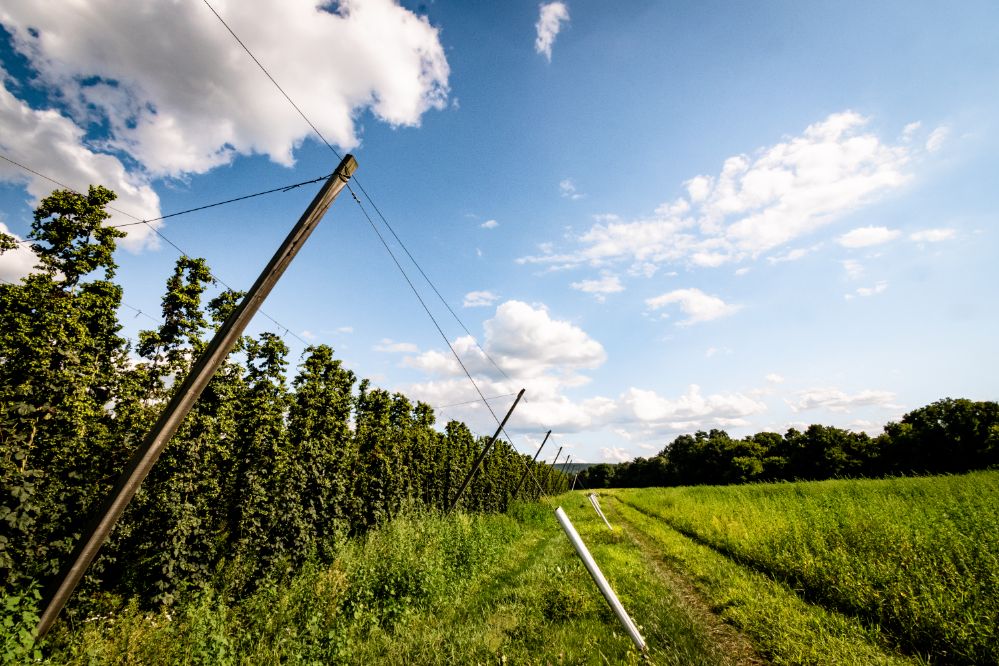
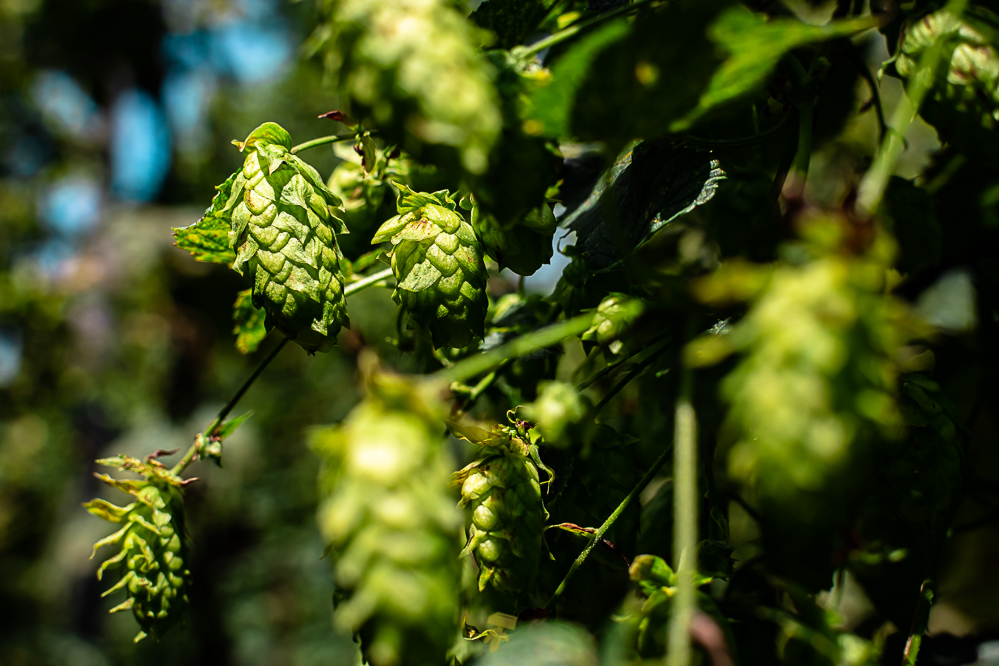
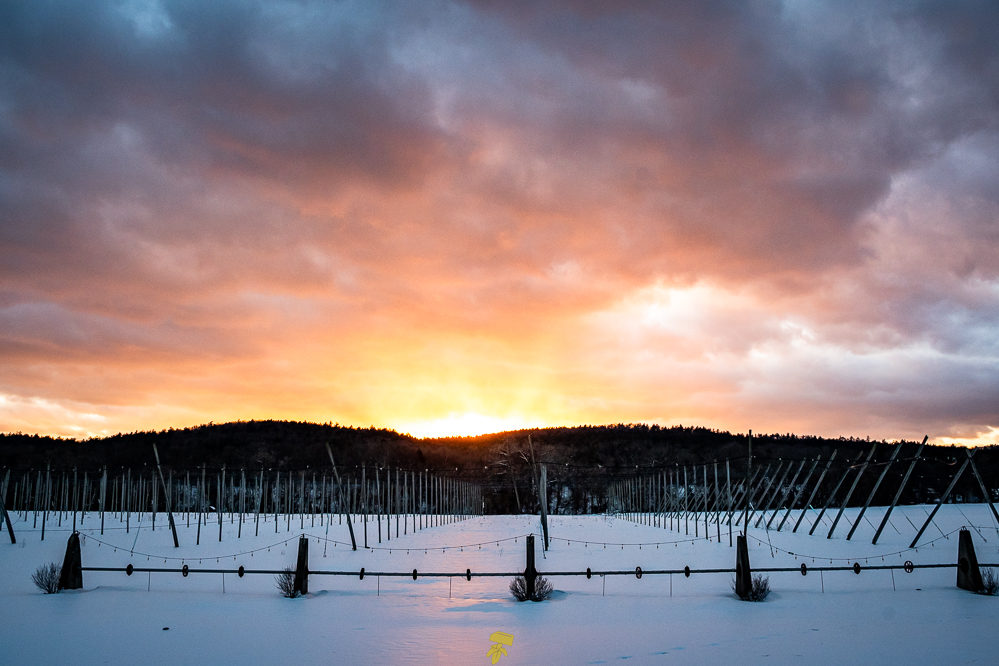
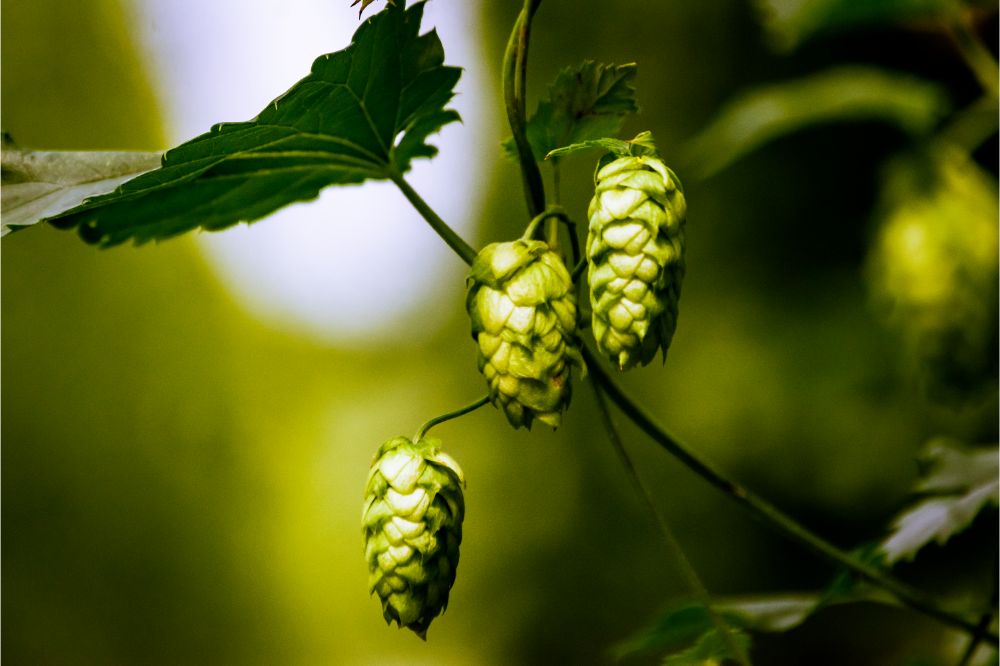
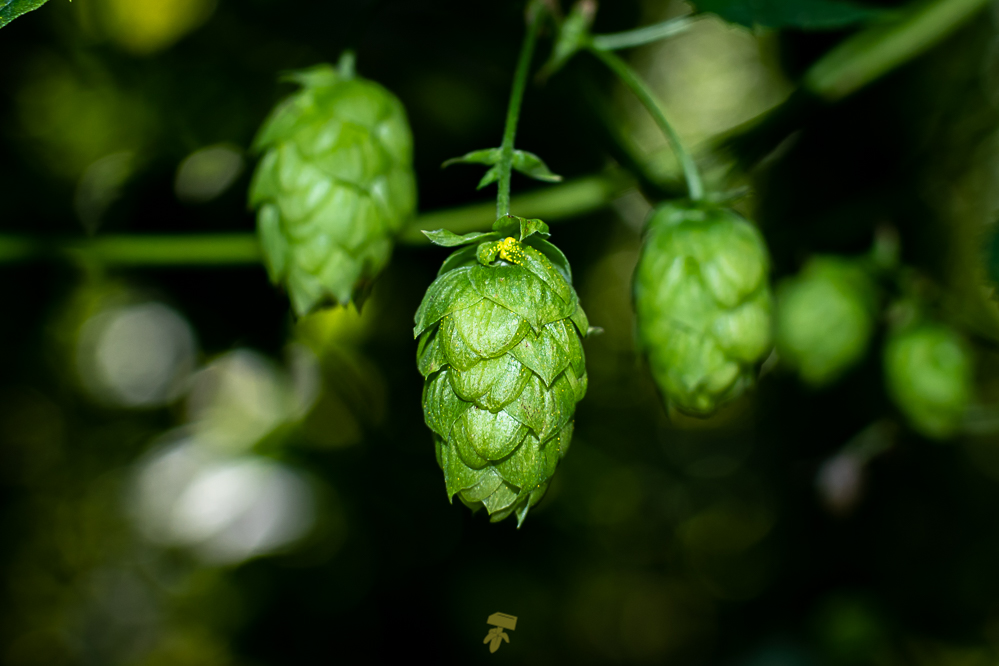
In winter, the hopyard is in its dormancy phase until the temperatures start to rise and the bines start to shoot through the soil again. Hops are the flowers of the herbaceous plant with bines that grow annually with perennial rootstocks. The bines grow along rope reaching upwards of 20 feet tall. The lupulin glands inside the hop cones contain essential oils and resins that are sought after for flavoring, bittering, and stability agents in beer. They also impart citrus, floral, and fruity aromas and tastes that many of us have come to love.

With a taproot that can extend 15 feet into the ground, this part of the hop plant can handle temperatures as low as -20 F with proper preparation. Covering the plant with several inches of mulch or using a plastic tarp will help protect the much shorter peripheral feeder roots and crown from freezes and death during the cold and winter months.
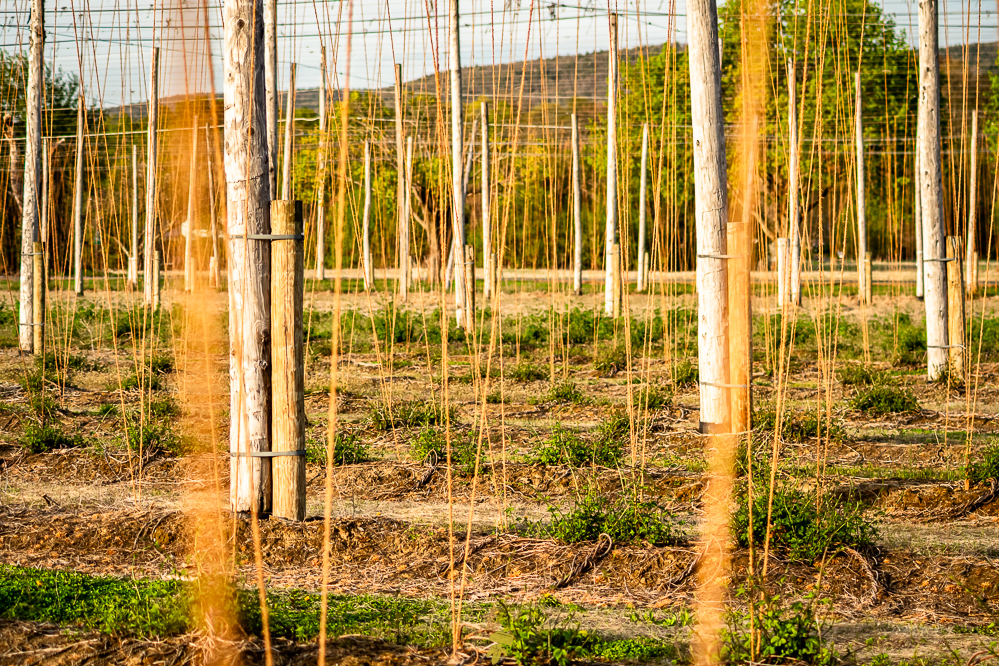
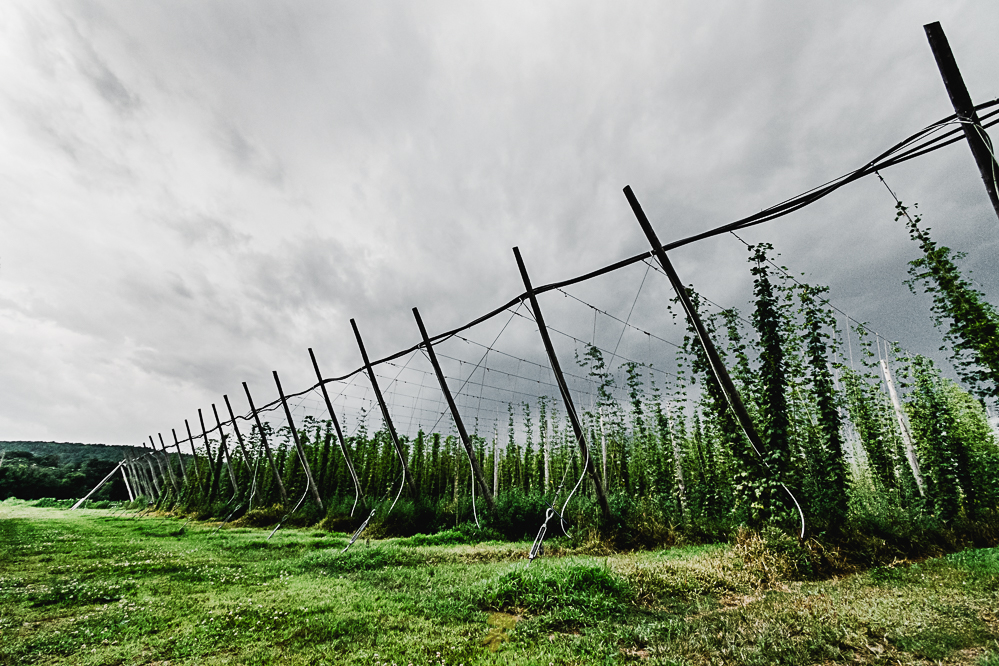
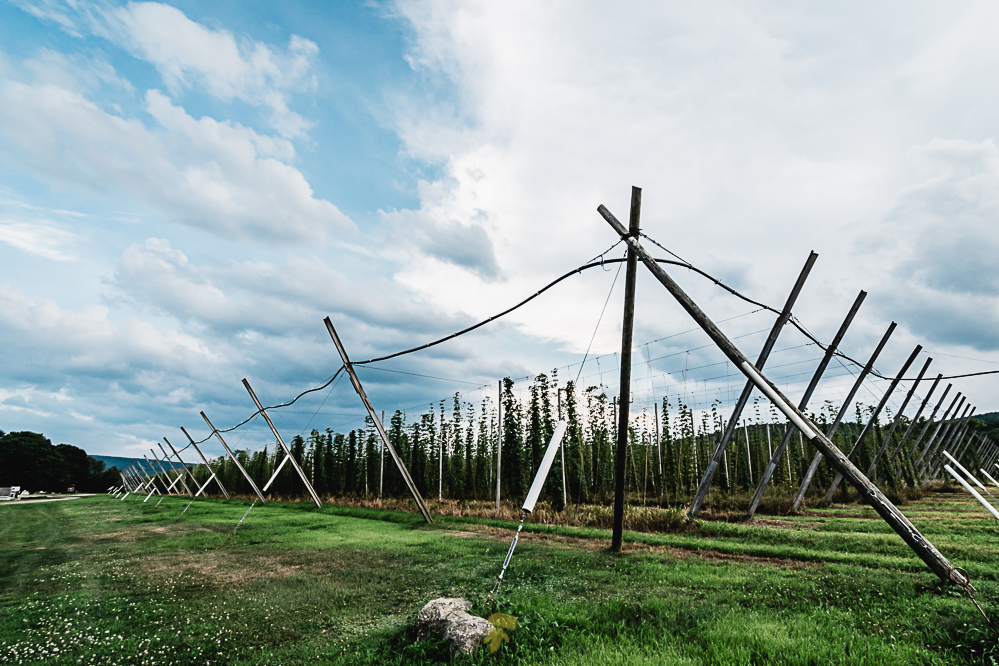
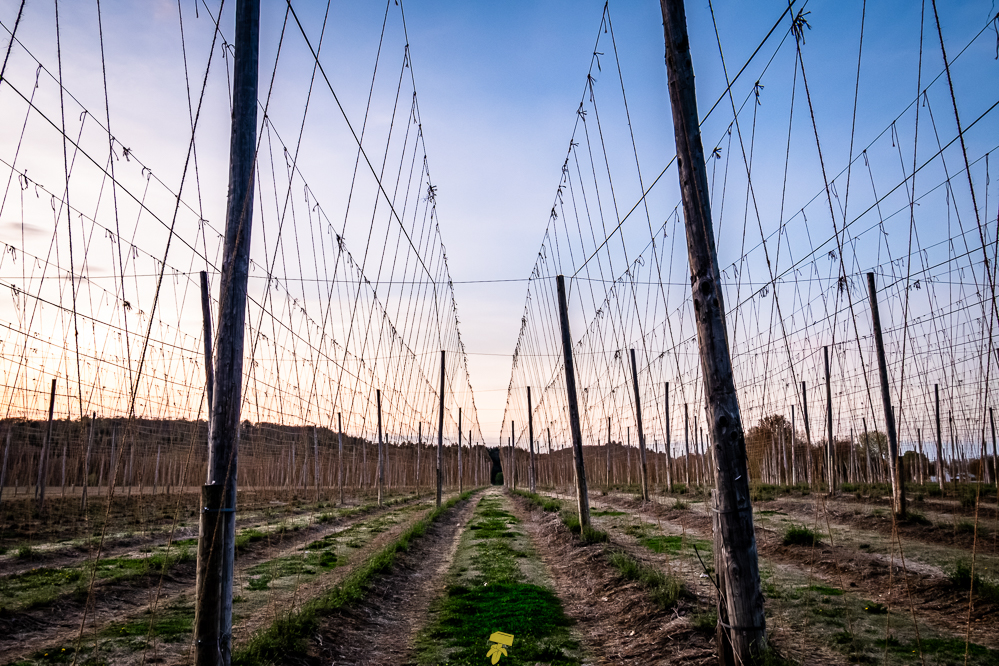
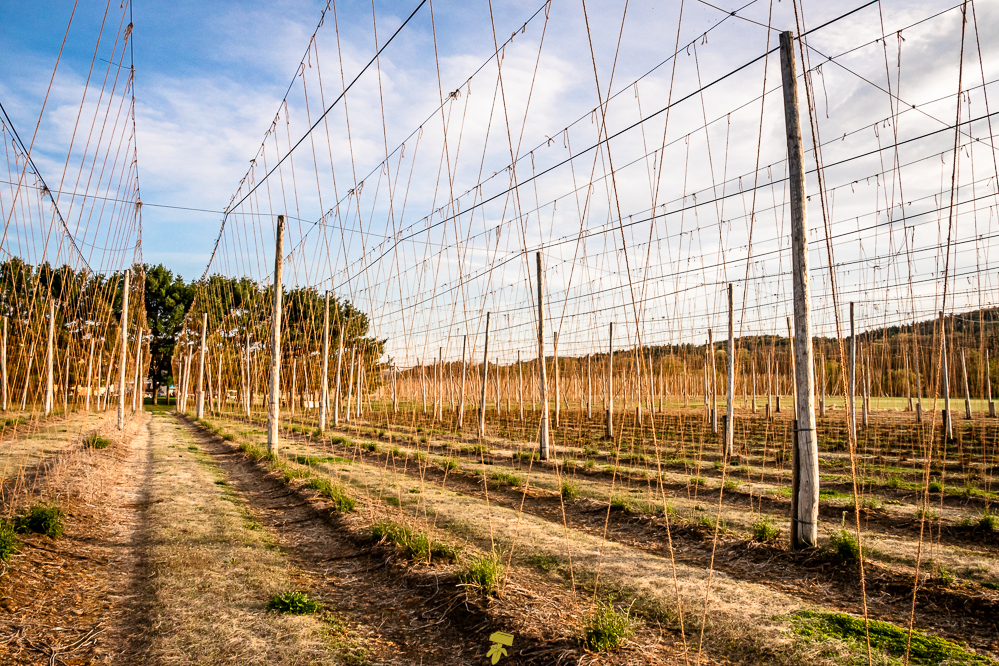
While the early spring snow thaws, the farmers are busy preparing for a new season by repotting previous cuttings that have been nurtured into small plants to start the propagation cycle again. Some of these will then be transferred to the yards to fill empty spaces and help increase production. Once the ground is clear, it’s time to build the infrastructure so the plants can grow. This consists of hanging rope along the permanent wooden beams and metal wire.
The farmers use a lift pulled by a tractor, moving slowly down each row as a person on both sides strings the coir by hand at a height of about 18 feet, while a crew below plunges the rope into the ground where the plant will grow. Coir, also known as coconut fibre, is a fibrous material found between the hard, internal shell and the outer coat of a coconut. This process takes a few days to complete the whole yard, and can be slowed by wet or windy weather. Once complete, it looks like a bizarre spider web of golden silk, ready to entangle unsuspecting farmers, brewers, and beer-drinkers who may get too close.
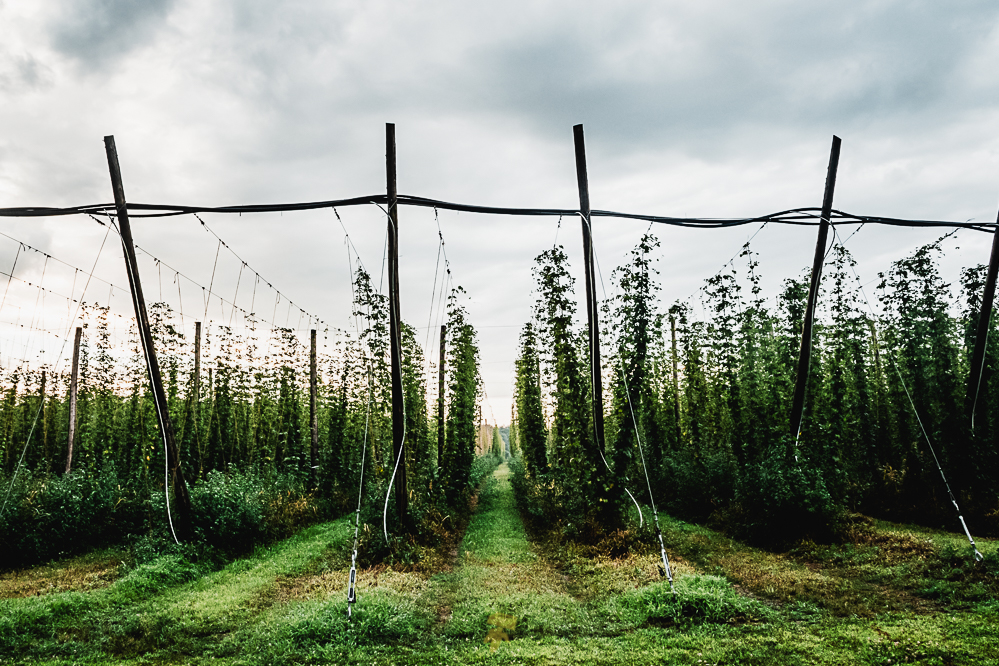
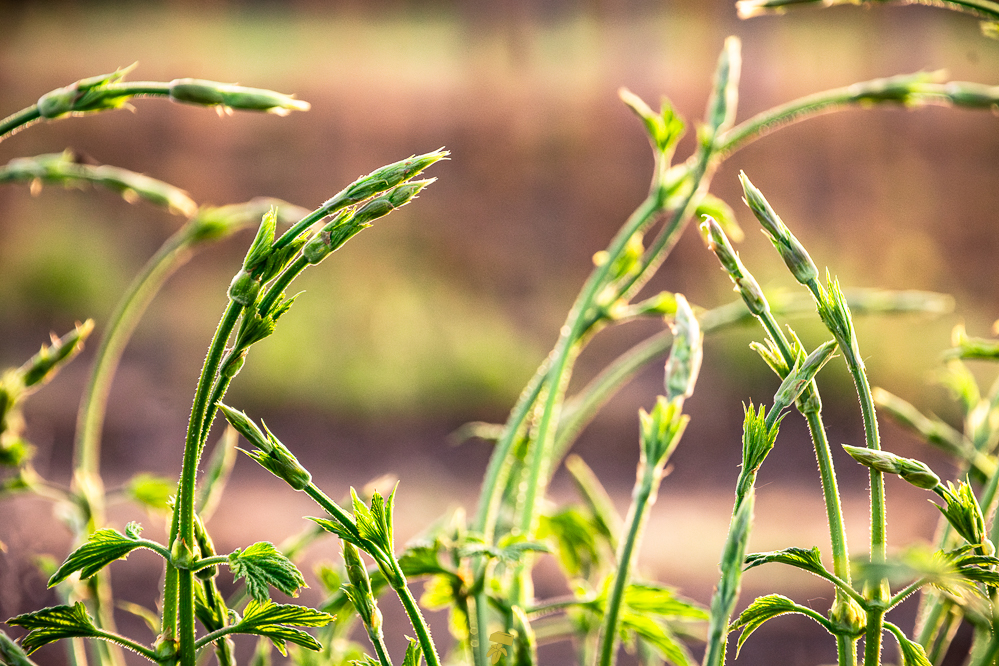
The bine shoots are sprouting through the ground and will very soon be hand-trained to follow the coir clockwise as they grow to the top of the trellis, following the sun. Each plant is cut back to the best 2-3 shoots, which ensures each shoot is not competing for resources to grow. As the bines climb, leaves develop along their length, providing the plant with the necessary surface area for photosynthesis. The plant needs to reach a certain height to transition to the flowering phase, typically around the time of the summer solstice. The hop plant is dioecious, that is it has separate male and female plants. Only the female plant produces the cones used in brewing.
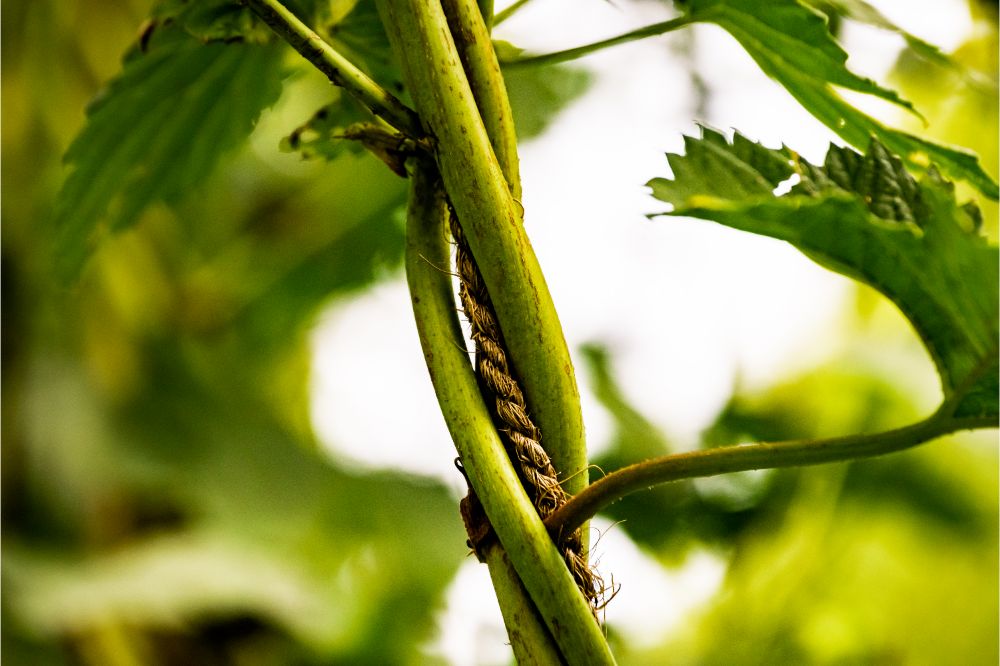
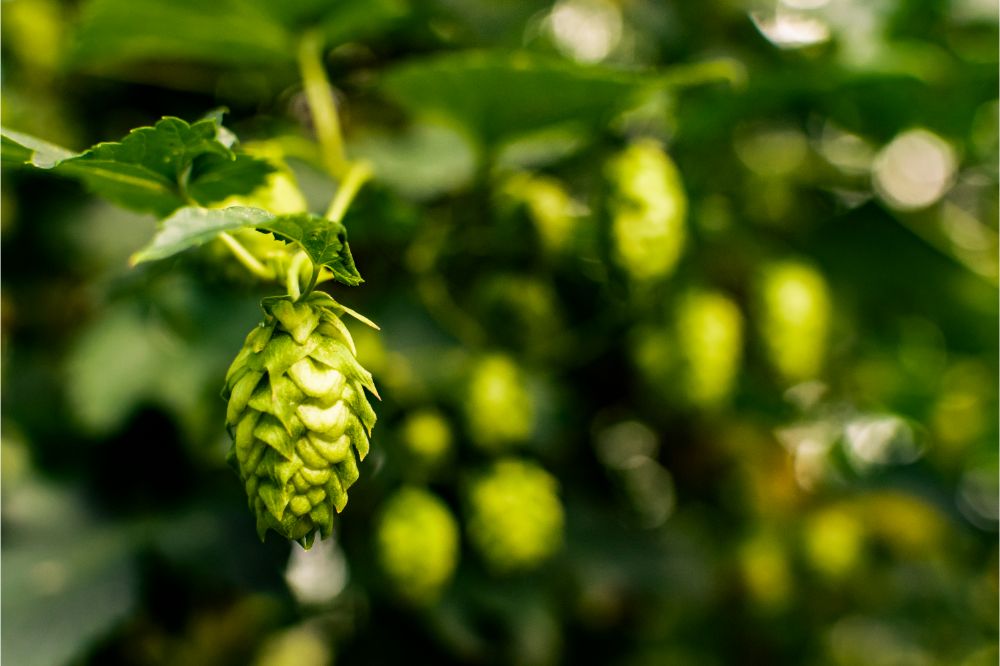
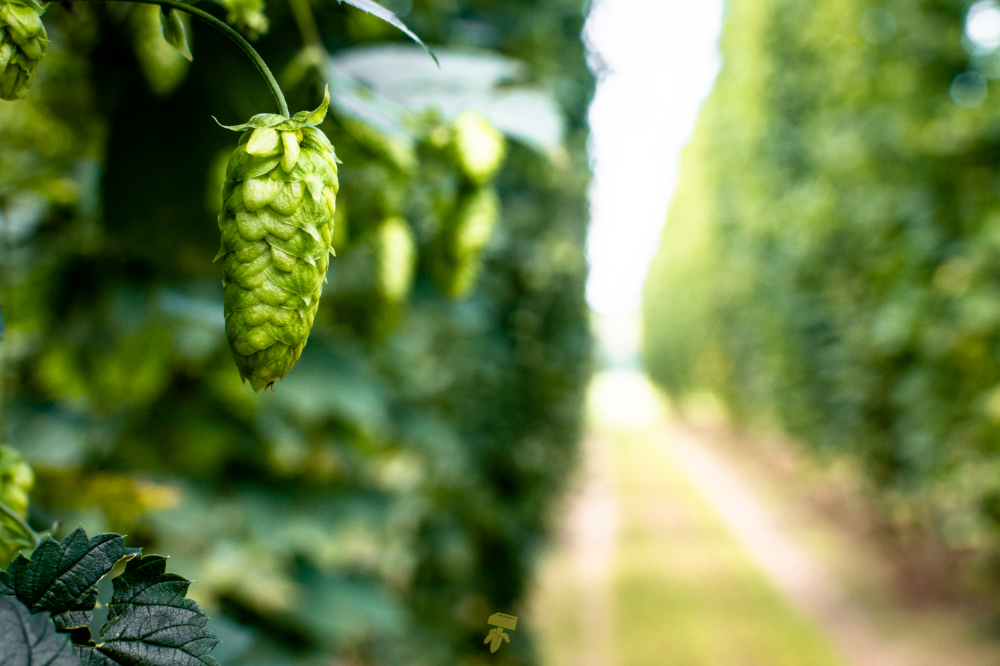
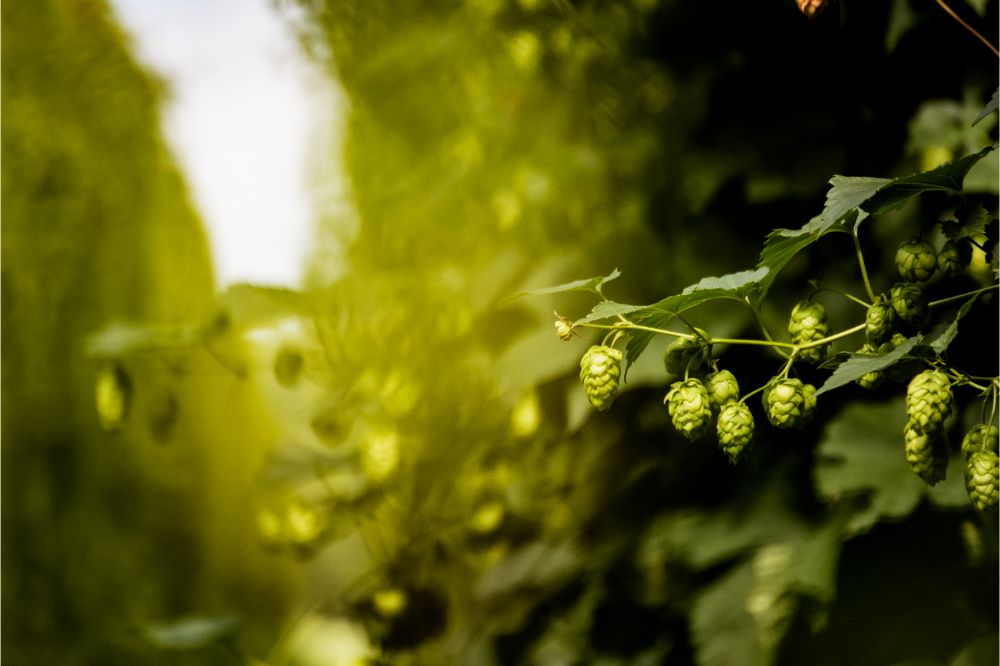
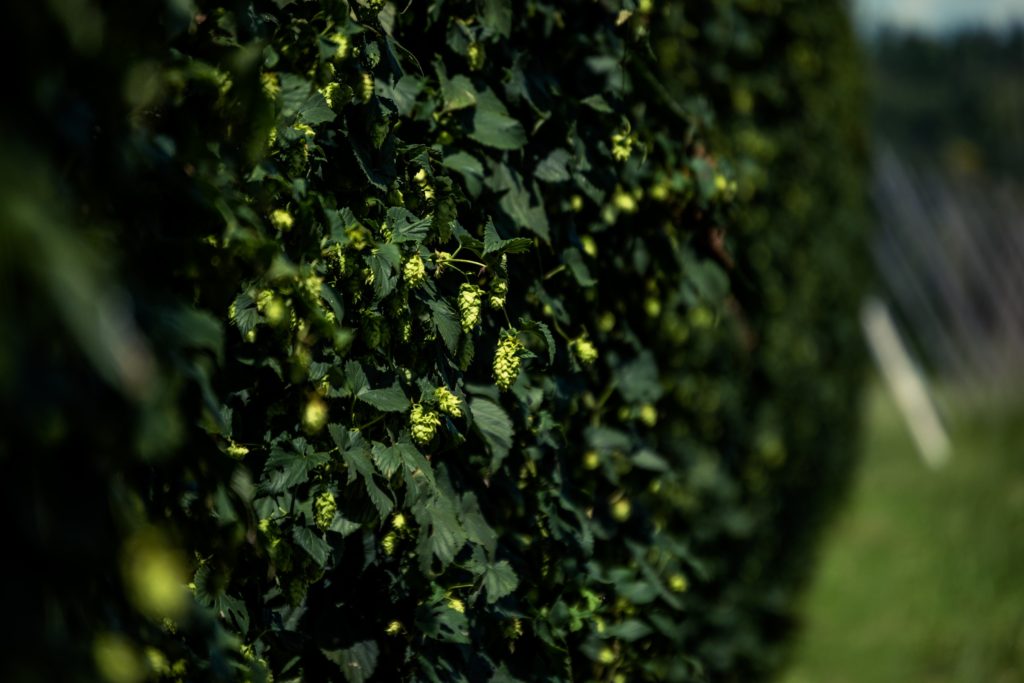
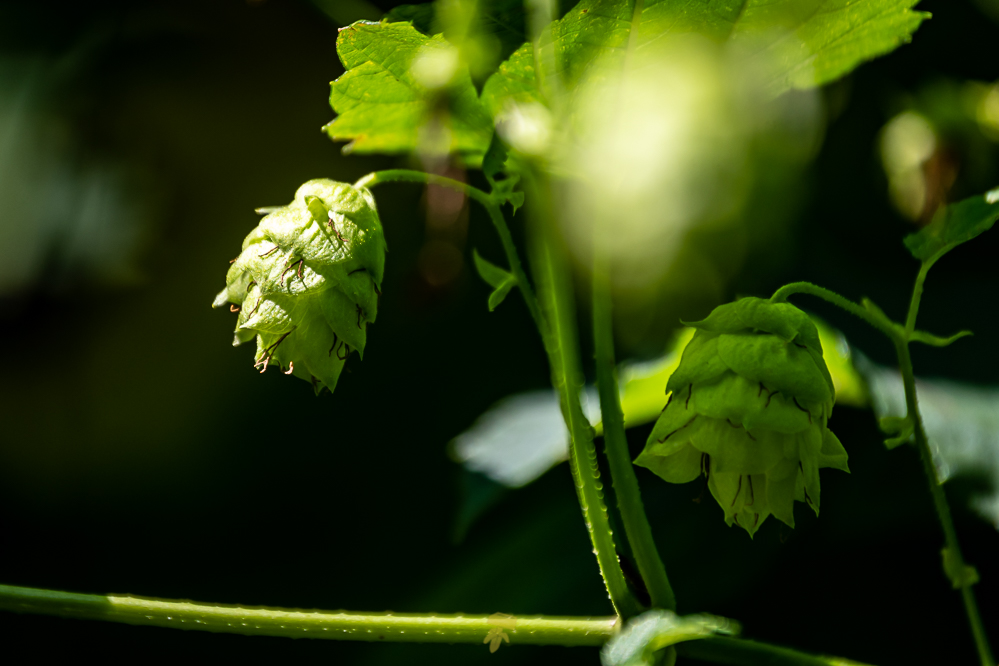
By July, the bines have climbed eighteen feet to the top, and the hop cone flowers are maturing, some over an inch long, others an inch thick. The bines grow along string or rope reaching upwards of 18-24 feet tall. The lupulin glands inside the cones contain essential oils and resins that are sought after for flavoring, bittering, and stability agents in beer. They also impart citrus, fruity, and floral aromas and tastes that a lot of us have come to love.
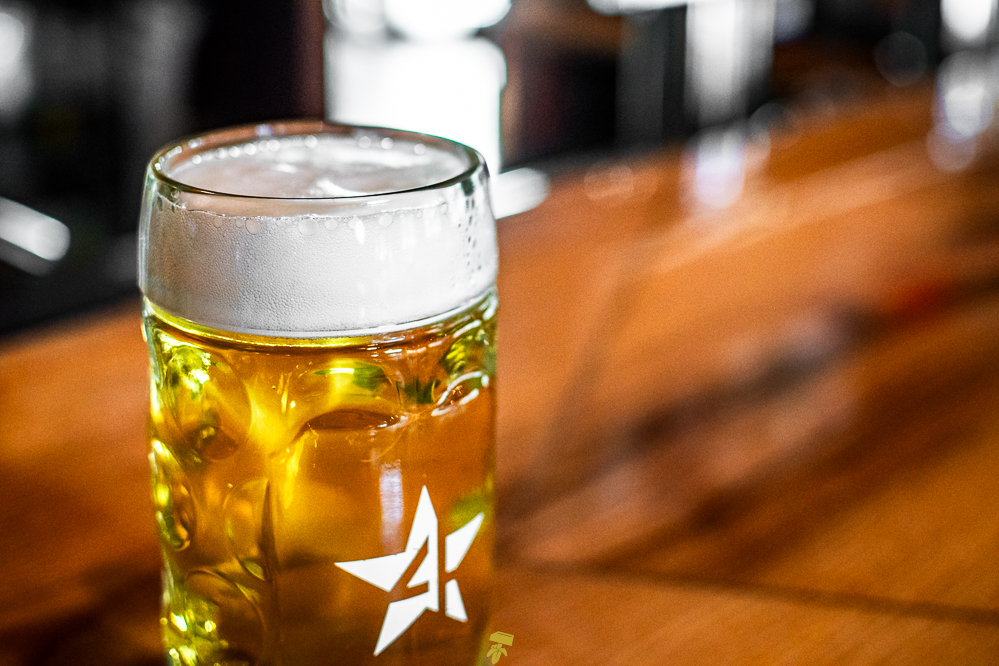
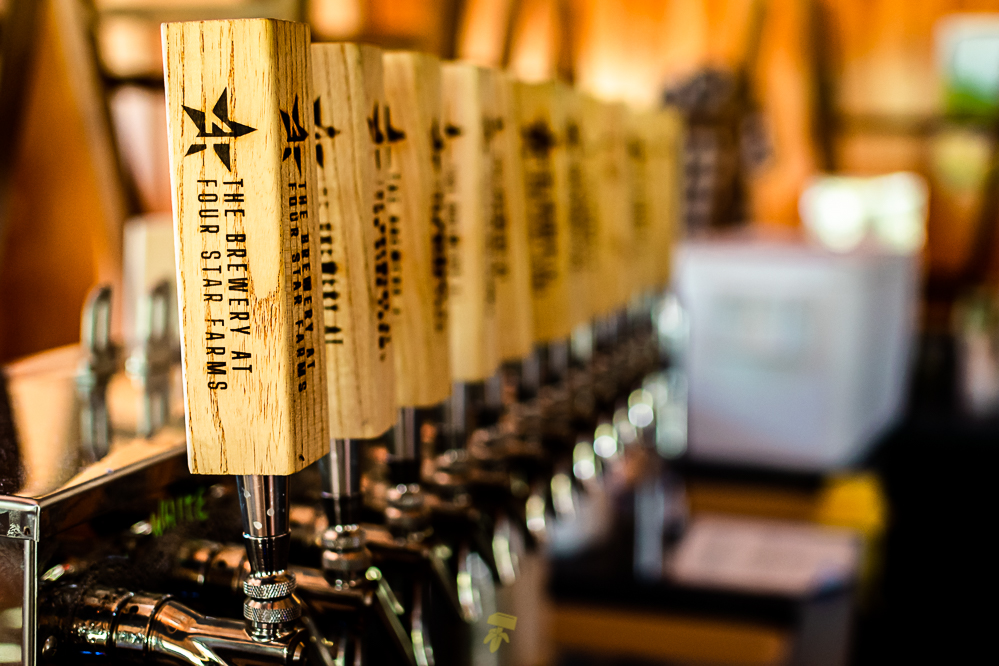
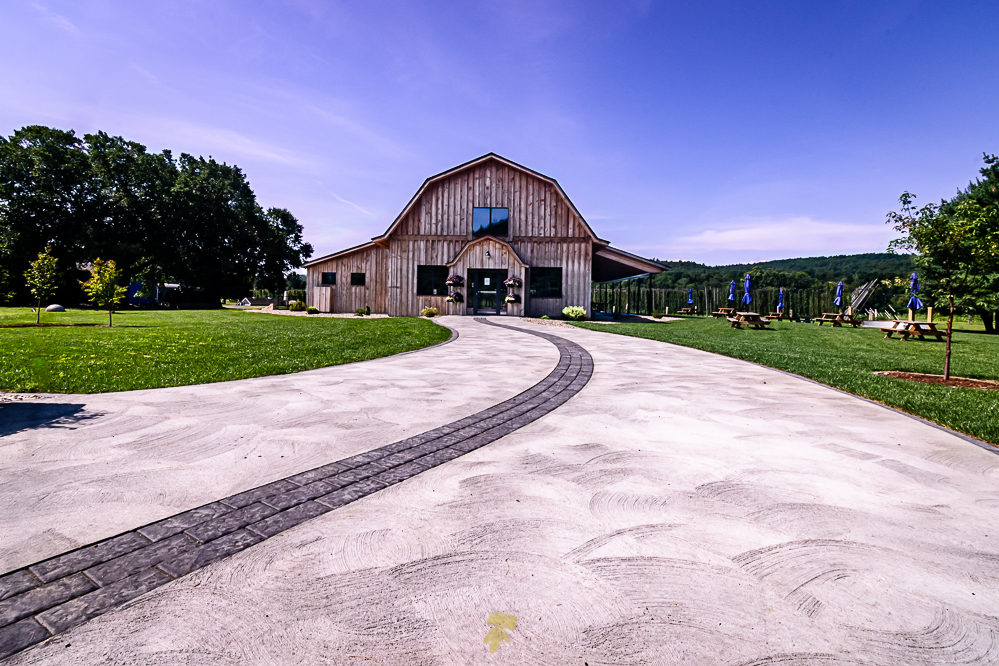
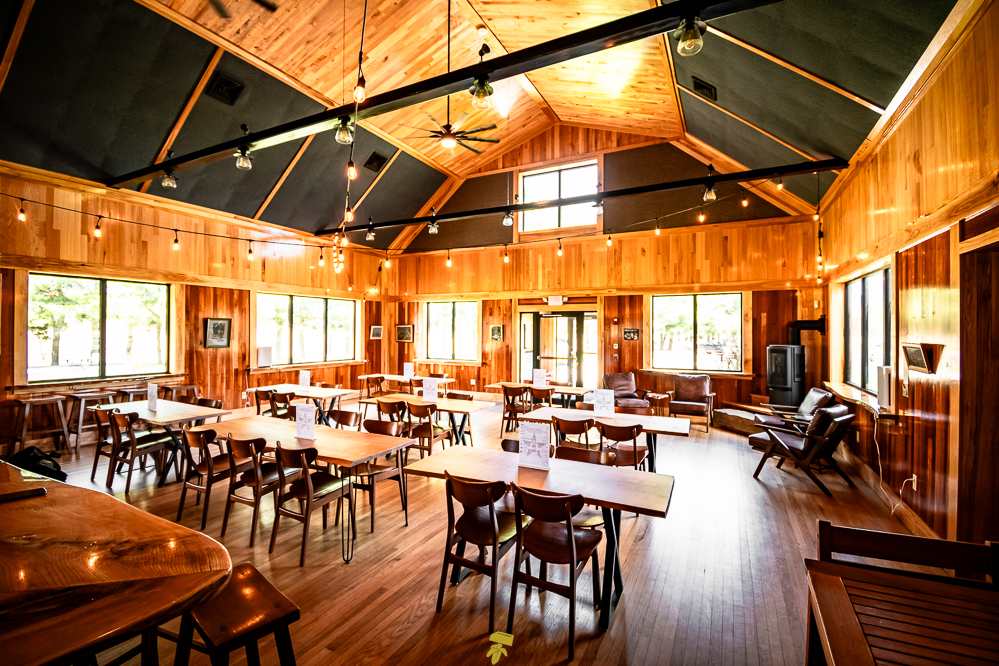
Arguably, the best time to visit the brewery located right next to the farm is the summer, when you can lounge on an Adirondack chair on the lawn while drinking a beer made from their own ingredients, while admiring the lush hops and the Berkshire Mountains in the distance. Opening in 2021, the farm built a brewery and taproom next to the hopyards using wood from their property. The seven-barrel brewhouse offers a variety of brews including “The Northfielder” a pilsner, “Dark Oast” porter, and “Bine Cutter” a New England IPA. As they are a hop farm, the brewery only use their own hops in the beer they make and also a few types of grain. Water is sourced from the Connecticut River which borders the farm.
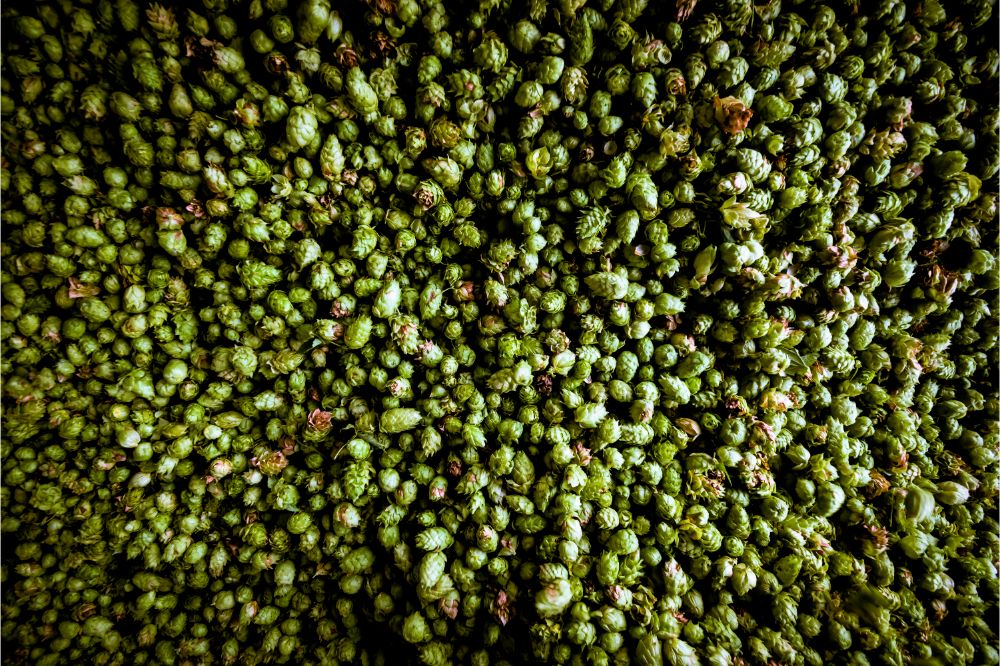
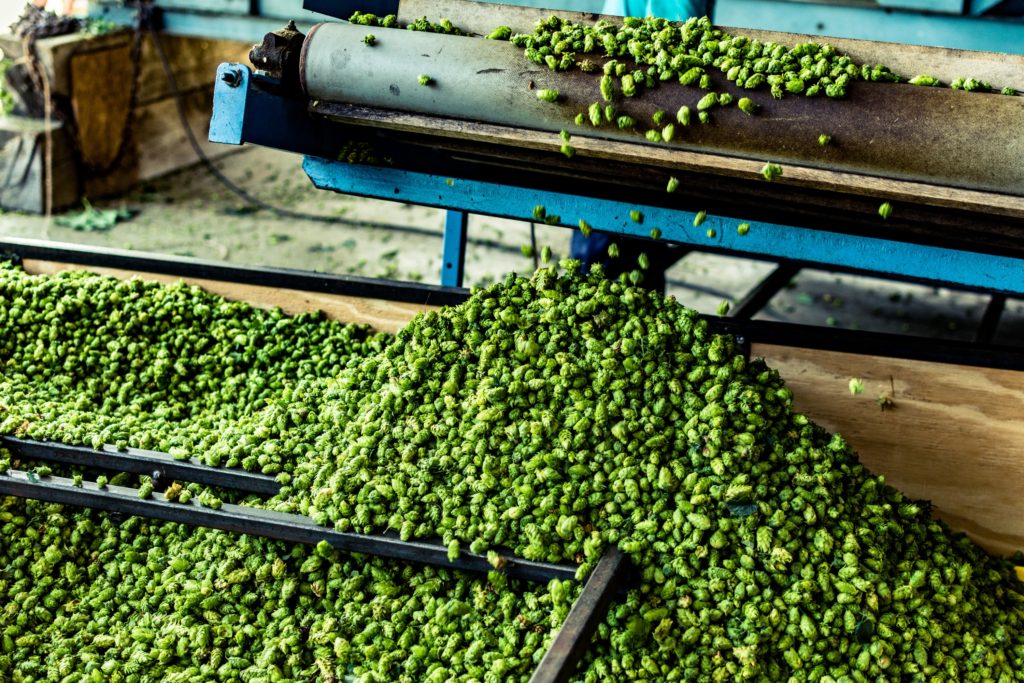
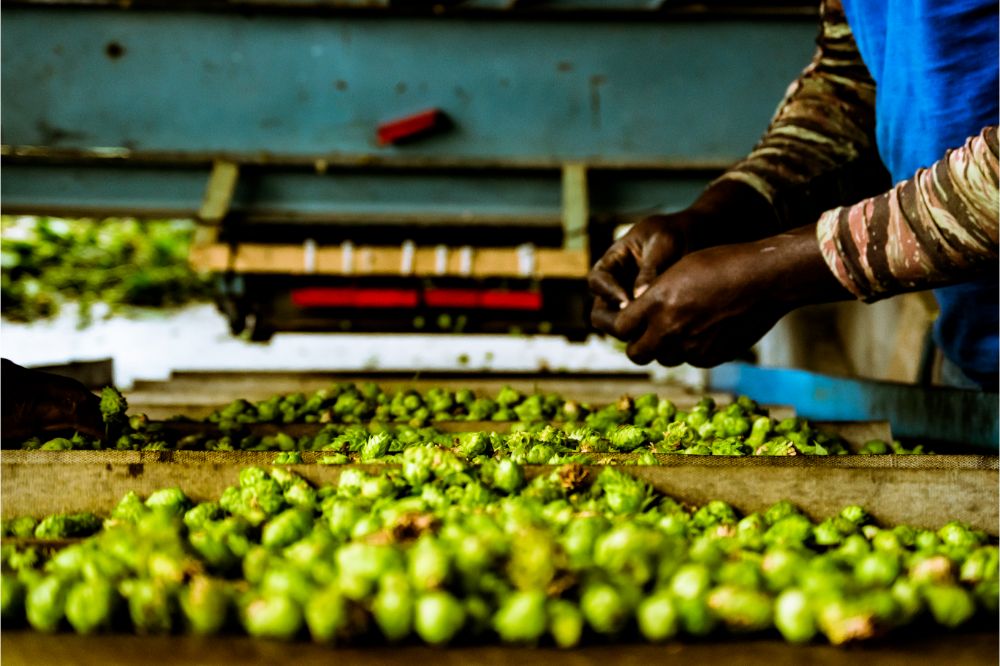
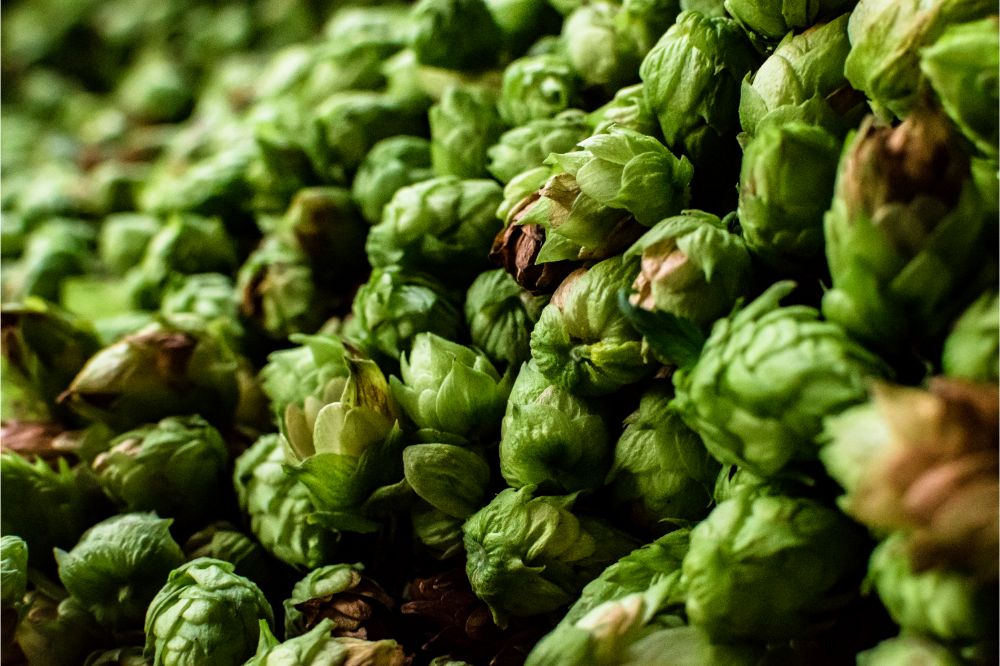
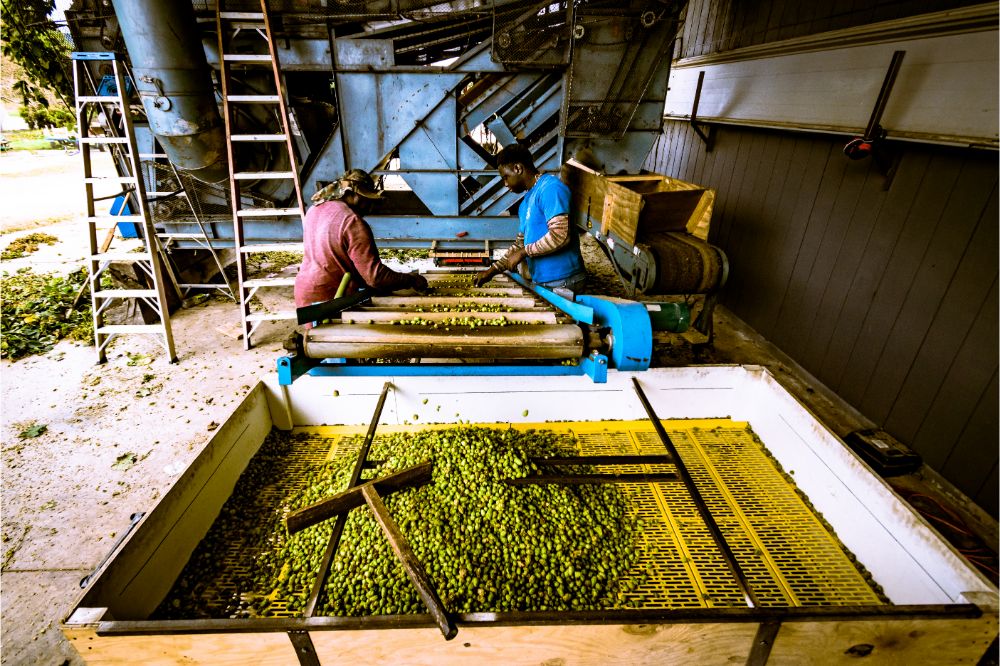
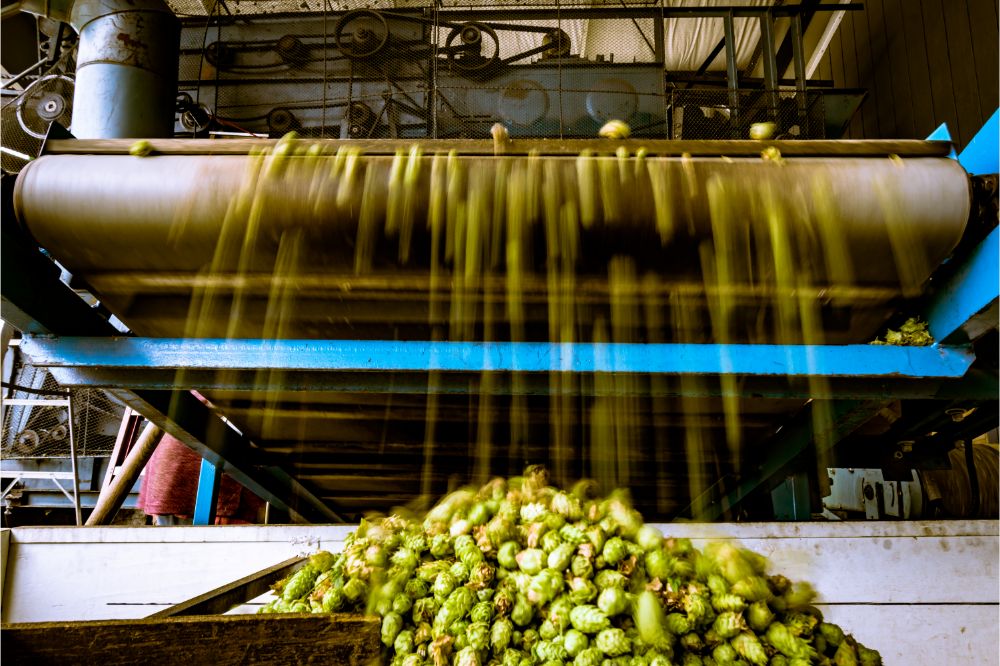
Depending on the weather in a given season, harvest usually begins with Centennial in late August with full harvest taking place in September. The crew processes bine by bine brought to them by the tractor-trailer load. The farm employs a special machine they got from Germany, which somehow separates the hop cone from all the other vegetal matter without damaging the cone. Workers feed the bines into the machine while on the other end, another worker picks out any bad hops or other debris that got through along a conveyor belt before dropping into large bins.
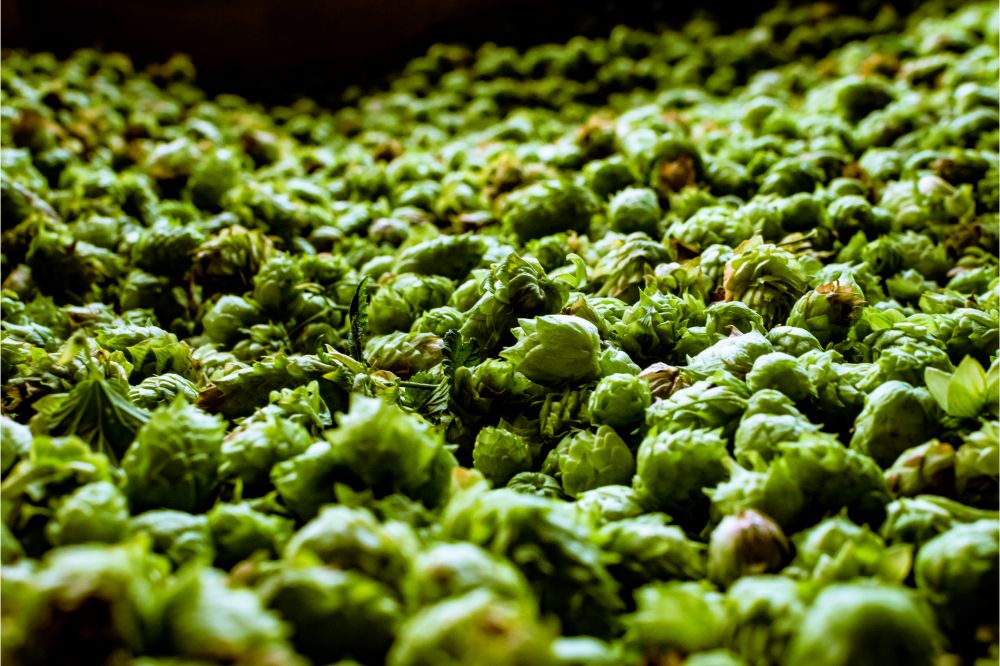
Many breweries in the area will flock to the farm to grab sacks of fresh wet hops to use opposed to the more common pelleted dry hops. For brewing, you typically need 3x-4x the amount of whole, unprocessed fresh hops and need to be used immediately as fresh hops spoil within days. Wet hop or fresh hop beer tends to be a bit more grassy with more herbaceous aromas and flavors.
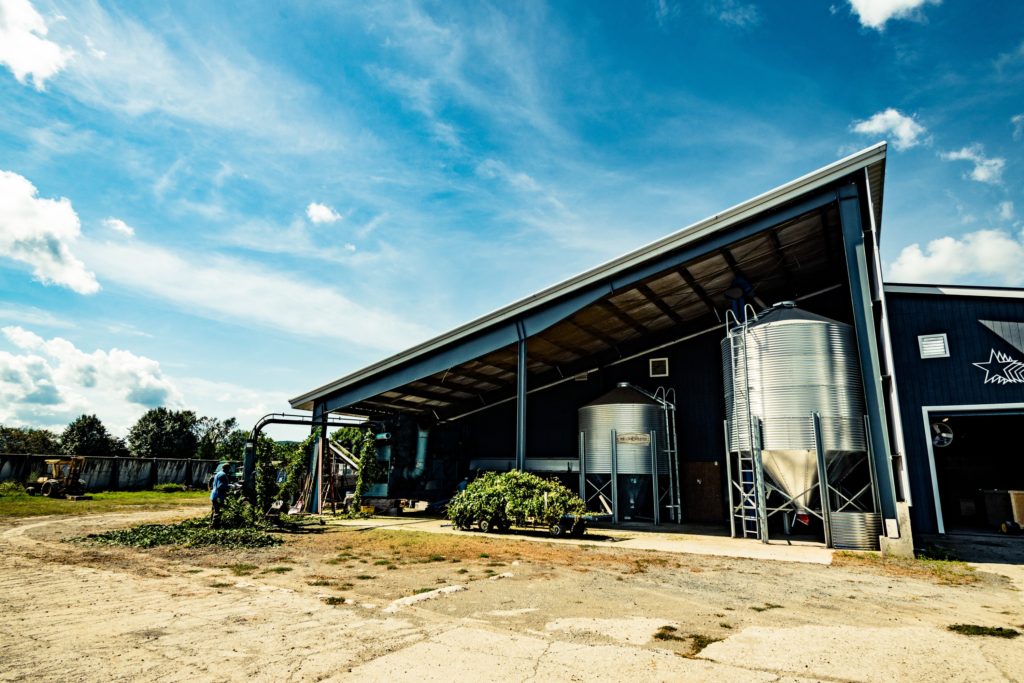
Most of the season’s yield will then be dried and pelletized. Stored pelletized hops can last two to four years in the refrigerator or up to five years in the freezer. Inside one of their barns, the Four Star dries hops using a three-tiered “oast” system with forced warm air, aiming to get the moisture content down to a storable level within 4-6 hours of harvest. This allows the farm to offer hops all year round, depending on the supply of each variety.